
Canvas Art Explained: Types, Benefits & Comparisons
Key Takeaways
- Canvas art is imagery created or reproduced onto woven canvas, then stretched over a wooden frame for a textured, gallery look;
- The two main types are hand-painted canvas paintings and printed canvas prints, each with different costs, care, and aesthetics;
- Canvas suits large, cozy, glare-free statement pieces in living rooms and galleries, and the right size and placement increase impact;
- For personal photos, Mixtiles offers lightweight, damage-free, repositionable tiles you can design and order in minutes.
Wondering what is canvas art and why it is everywhere in contemporary home decor? Canvas art covers images applied onto canvas material, either as original artwork painted by an artist or as a canvas print created using professional printing. That subtle weave softens edges and adds depth, which is why these pieces feel warm and elevated on a wall. Learn how canvas works, how it compares to other formats, and when Mixtiles might be the smarter choice for your own images.
Turn your favorite photos into beautiful wall art. Create stunning custom canvas prints in minutes, no nails, no stress.
What is canvas art exactly?
Canvas art is imagery placed onto cotton or linen canvas, then stretched onto stretcher bars or a wooden frame. You will see two approaches: hand-painted pieces using acrylics or oils, and printed reproductions created by high-quality giclée printing services. The canvas material creates a soft, painterly look, and the wrap around the edges delivers a frameless, gallery display that feels refined yet relaxed.
Canvas paintings vs. canvas prints: what is the difference?
Canvas paintings are original artwork, often created with oil or acrylic paint directly onto primed canvas. Each piece is one of a kind and shows texture from brushstrokes or palette knives. They are typically higher in price and are collected as fine art.
Canvas prints are images, often photographs or digital artwork, printed onto canvas using archival pigment inks. A canvas print offers consistent color, professional quality, and accessible pricing across many sizes. Prints are often stretched and ready to hang, and you can also order framed canvas for a more finished look. To spot the difference, look for true paint texture versus the uniform texture of the printed weave, and note whether there is a protective varnish or a print coating.
What materials and techniques give canvas art its look?
The foundation is the canvas material itself. Cotton canvas tends to be smooth and shows vibrant color, while linen is more textured and durable, which many artists prefer for fine art work. Canvases are primed with gesso, then stretched tightly over stretcher bars for stability. For printing, professional studios use archival inks, color management, and correct resolution, so your images stay crisp and rich over time.
Popular finishes and wrap styles
The most popular finish is a gallery wrap, where the image continues around the sides. You can also choose mirrored edges or a solid color if you want to preserve the full image on the front. A float frame adds a contemporary shadow gap and feels refined in a gallery or living room. Protective coatings or varnishes come in matte or satin, which can reduce glare and protect from dust.
Why do people choose canvas art for home decor?
Canvas is popular because it is light, frameless, and easy to display. It reduces reflections compared to glass, so colors look soft and inviting even near windows. The format scales well to large sizes without feeling heavy, which is ideal over sofas or beds. It also offers a cost-conscious way to achieve big wall decor impact, whether you prefer a single large piece or multiple pieces curated as a gallery wall.
How does canvas art compare to other wall art formats?
Each format has its own strengths. Canvas brings warmth and texture. Paper-based art prints, framed prints, and poster prints shine for fine detail and budget options. Metal prints and acrylic are sleek and glossy for a modern view. The quick table below helps you choose the best product for your space.
Still deciding between materials? Get a side-by-side comparison in our acrylic print vs canvas guide and explore how sheen, depth, and durability differ in our metal print vs canvas breakdown.
|
Format |
Texture and Look |
Framing |
Weight and Glare |
Best For |
|---|---|---|---|---|
|
Canvas Prints |
Soft texture, painterly feel; |
Stretched onto wooden frame, optional float frame; |
Lightweight, low glare; |
Large statement pieces, cozy rooms, flexible styles. |
|
Art Prints on Paper |
Crisp detail, fine art papers; |
Usually framed under glass or acrylic; |
Heavier with potential reflections; |
Photography detail, classic framed display. |
|
Metal Prints |
High gloss or satin, ultra modern; |
Often float-mounted without a traditional frame; |
Medium weight, some glare on glossy; |
Contemporary spaces, bold color and contrast. |
|
Poster Prints |
Budget-friendly, smooth surface; |
Framed or taped as casual wall art; |
Very light, can curl if unframed; |
Dorms, temporary displays, quick decor refresh. |
Canvas vs. Mixtiles, repositionable photo tiles
Choose canvas if you want a painterly texture, a classic gallery wrap, or a single large canvas print as a focal point. Choose Mixtiles if you want a modular grid of personal images you can stick, unstick, and restick without tools. Mixtiles products include framed prints, frameless tiles, and premium Canvas Tiles that give you a similar soft look with easier mounting.
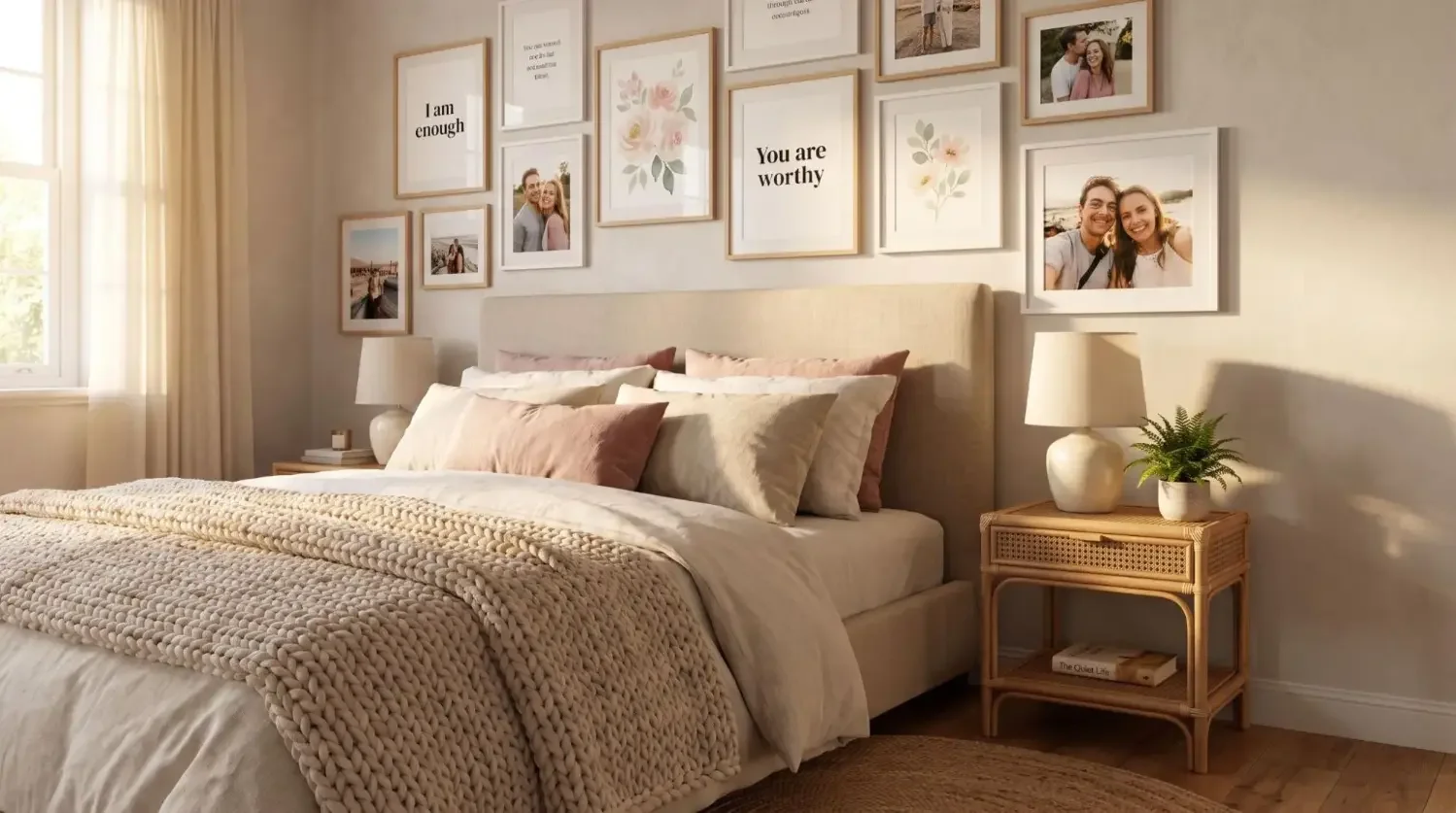
Ready for a photo gallery wall you can perfect in minutes? Design, stick, and restick with Mixtiles. Download the app and start free layout previews.
What size, layout, and placement make canvas art shine?
Scale drives impact. As a rule of thumb, aim for a canvas width that is roughly two thirds to three quarters of the furniture below it. Over a sofa or bed, a single large piece like a 20x20 canvas print or a tidy row of two or three pieces will feel balanced. For gallery walls, keep spacing consistent for a clean grid, and center the overall display at eye level, usually around 57 to 60 inches from the floor.
Not sure which dimensions fit best? Check our canvas size chart for common sizes and room-by-room recommendations.
Choosing imagery and color

Match your palette for harmony or introduce contrast to create a standout focal point. Consider the mood you want in each room: soothing neutrals in a bedroom, vibrant color in a living room, or black and white in a home office. A series of related images can tie a space together and guide the view across the wall.

How do you care for and mount canvas art?
For traditional canvases, sawtooth hangers or a wire system work well. Use wall anchors for heavier pieces or when you cannot hit a stud. Dust your artwork with a soft, dry cloth, and avoid direct sunlight and high humidity. With Mixtiles, mounting is even simpler: the adhesive or magnet system lets you place and adjust tiles cleanly, which helps renters and frequent movers keep walls pristine.
For step-by-step hardware choices and positioning, see how to hang canvas art on a wall.
Common pitfalls to avoid:
- Uploading a low-resolution image for a large canvas print, which can reduce quality;
- Ignoring edge wrap, which may crop important parts of your image onto the sides;
- Hanging too high or crowding furniture, which throws off balance.
Canvas art blends texture, scale, and timeless style. Whether you love the character of hand-painted pieces or the accessibility of canvas prints, understanding materials and placement helps you choose with confidence. If you want a lightweight, damage-free, and endlessly rearrangeable way to display your own images, Mixtiles makes it easy to create, order, and display a gallery that you will love.
Make your walls smile. Turn your photos into beautiful, repositionable photo tiles today, and bring your unique wall arts vision to life.
Frequently Asked Questions
Why can canvas art cost more than other formats?
Costs reflect materials and labor. Quality cotton or linen, archival inks, sturdy stretcher bars, and hand-stretching raise prices. Protective coatings add time. Originals or limited editions command premiums due to artist reputation and scarcity. Larger sizes and custom framing also increase cost.
Canvas prints or acrylic prints, which is better for my space?
Pick canvas if you want a warm, textured look, low glare, and lightweight large pieces at approachable prices. Choose acrylic for a sleek, glossy surface, punchy color, and a contemporary feel, expect more glare and weight. For easy, damage-free photo displays, consider repositionable tiles like Mixtiles.
What paint should I use on canvas?
Acrylic and oil paints are the go-to choices for canvas. Acrylics dry quickly, are flexible, and clean up with water, great for beginners. Oils blend beautifully and deliver depth, but need longer drying times and solvents. Always paint on gesso-primed canvas for best adhesion and color.

Be the first to know — deals, news & decor ideas.
By clicking you agree to the Terms of Use & Privacy Policy