
How to Frame a Canvas Print: Easy DIY Tips & Tricks
Key Takeaways
- Float frames and shadow boxes are the most popular ways to frame a canvas, protecting edges while adding a gallery look;
- Measure width, height, and depth, then add 2 to 4 mm clearance around for a clean shadow line and stress‑free fit;
- DIY basics: cut miters, glue and reinforce corners, finish the wood, then secure the canvas to the frame from the back;
- Want a faster route to a framed look, no nails required? Try Mixtiles framed photo tiles that stick and restick.
If you are wondering how to frame a personalized canvas print, you have options. A float frame or a deep shadow box keeps your canvas art looking crisp, while sealing delicate edges from bumps. Below, you will learn to measure, choose frames, and follow simple DIY steps using common tools. Prefer zero tools at home? You can also get a framed look with Mixtiles, made to stick to the wall without damage and move around whenever you like.
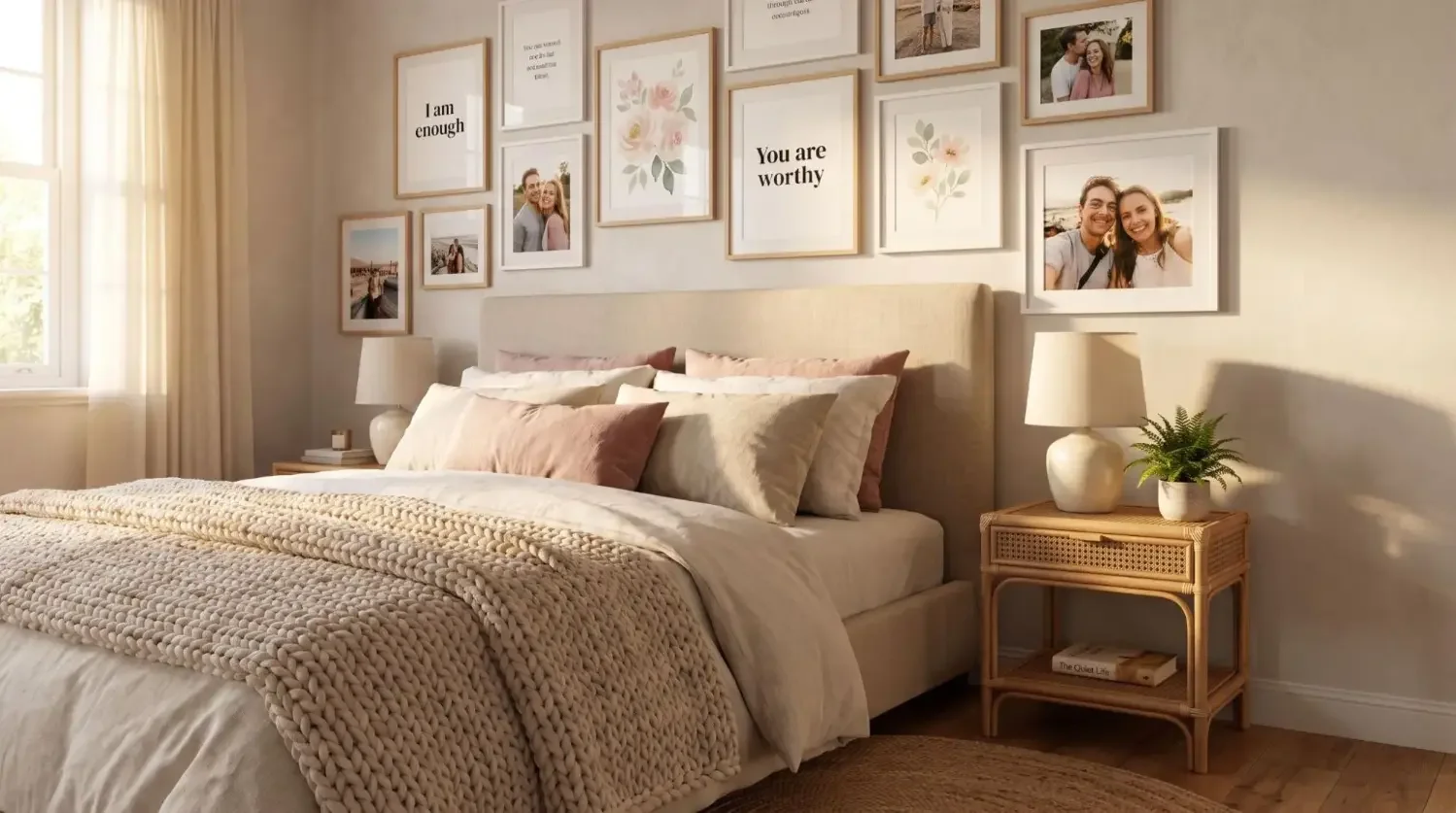
Build a stunning photo gallery wall, no tools required. Create your Mixtiles gallery in minutes with our easy-to-use photo tiles.
Which frame style works best for a canvas print?
Most people choose a float frame for modern minimalism or a shadow box for classic depth. Both let your stretched canvas breathe, so the picture frame never presses on the image. Still deciding on the right medium? Compare acrylic print vs canvas to understand finish, depth, and framing considerations.

Float frame: Leaves a slim gap around the canvas for a “floating” effect and great edge protection.

Shadow box: Uses deeper wood frames to enclose the piece of art, ideal for bold, statement canvas art.
What tools and materials do you need?
For a straightforward DIY, gather the essentials before you start framing.
- Miter saw or miter box and hand saw;
- Wood glue and v‑nails or corner braces;
- Sandpaper and finish: stain, paint, or clear varnish;
- Drill with countersink bit and suitable screws or offset clips;
- Measuring tape, square, pencil, and painter’s tape;
- Clamps for clean, tight corners.
How do you measure a canvas for the right fit?
Measure width, height, and the canvas depth created by the stretcher bars. Add 2 to 4 mm clearance to width and height so the framed canvas drops in without scuffing paint. Please note: always confirm screw length so you do not puncture the back of your canvas. For typical sizes and aspect ratios, check our canvas size chart.
|
Canvas Size Example |
Typical Depth |
Clearance To Add |
Suggested Screw Length |
|---|---|---|---|
|
12 × 16 in, 30.48 × 40.64 cm |
0.75 in, 19 mm |
2 to 4 mm |
0.5 to 0.75 in, 13 to 19 mm |
|
20 × 27 in, 50.8 × 68.58 cm |
1.5 in, 38 mm |
2 to 4 mm |
0.75 to 1 in, 19 to 25 mm |
|
27 × 36 in, 68.58 × 91.44 cm |
1.5 in, 38 mm |
2 to 4 mm |
0.75 to 1 in, 19 to 25 mm |
What are the basic steps to frame a stretched canvas at home?
The simplest way to frame a canvas: cut and assemble a frame to your inner measurements, finish it, then attach the stretched canvas from the back using screws or offset clips.
Cut and assemble the frame
Mark inner miter lengths, then cut at 45 degrees. Dry fit around your frame canvas to confirm the shadow line. Glue corners, then reinforce with v‑nails or corner braces while clamps hold everything square.
Sand and finish
Lightly sand to smooth edges. Apply stain, paint, or clear coat so your wood frames complement your living room or gallery wall.
Secure the canvas
Pre‑drill and countersink from the back of the frame. Use screws short enough to avoid touching the canvas. Aim for the stretcher bars, not the fabric.
Skip the sawdust. Turn your photos into beautiful canvas prints, lightweight and repositionable. Design yours now.
Can you frame an unstretched canvas print?
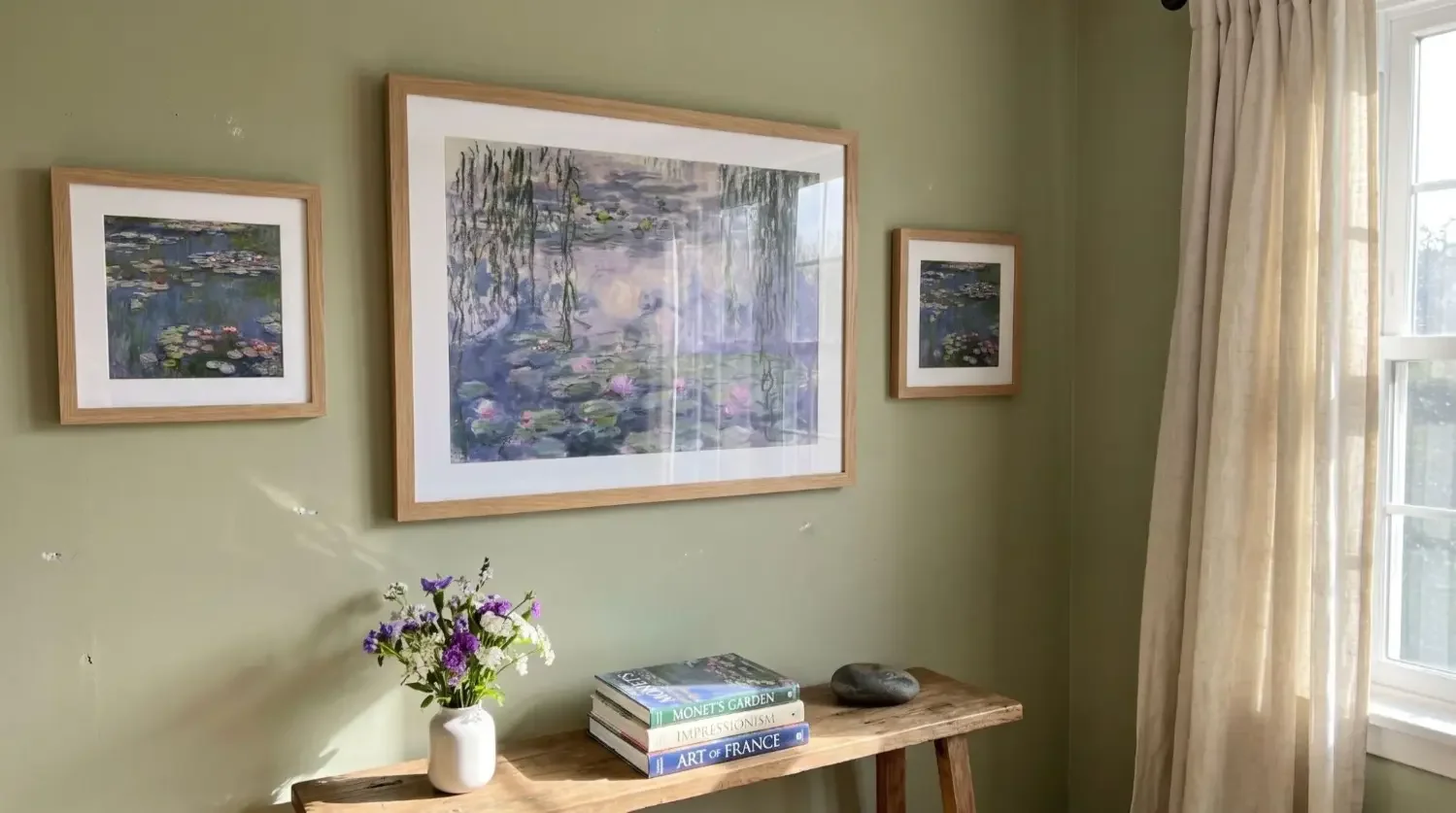
Yes, first stretch it on stretcher bars or mount it to a rigid panel. You can also place it in a deep picture frame once it is stretched, which protects edges and gives different style options.
How should you hang a framed canvas safely?
Install D‑rings and picture wire, then use anchors rated for the frame weight and your wall type; see how to hang canvas art on a wall for a full walkthrough. For drywall, find a stud when possible. For brick or tile, choose masonry anchors. Keep artwork away from direct heat and humidity at home.
Want the framed look without framing a canvas?
Try Mixtiles: framed photo tiles and Canvas Tiles made to stick and restick. No nails, no tools, clean removal, and easy layout tools help you find the best way to frame your wall story using your own art and photos.
Now you know how to frame a canvas print, from measuring to securing the stretched canvas. If you want a fast, flexible gallery without hardware, Mixtiles helps you get a polished, framed look in minutes.
Ready to refresh your walls? Create your Mixtiles set today. Peel, stick, and restick for the perfect wall gallery, shipped free.
Frequently Asked Questions
Can I frame a canvas print myself at home?
Yes. Measure width, height, and depth, then choose a float frame slightly larger than the canvas. Leave a 2 to 4 mm gap all around. Pre‑drill and secure from the back into the stretcher bars with short screws or use offset clips. Work on a clean surface.
Can I add a frame to a canvas that is already stretched?
Absolutely. Center the canvas in a float frame so the shadow line is even, flip it over, then pre‑drill and fasten through the frame into the stretcher bars. Confirm screw length will not pierce the canvas. Offset clips are a good alternative to screws.
How do I frame an unstretched canvas print?
First, stretch the print over stretcher bars or mount it to a rigid panel. Once rigid, place it in a float frame or a shadow box and secure from the back. If you want a faster option, consider ready‑to‑hang solutions like Mixtiles Canvas Tiles.
What frame style works best for canvas prints?
Float frames, also called floater frames, are the top pick since they protect edges and reveal the full image with a clean gap. Shadow boxes add depth and presence for bold pieces. Choose a style that complements the art and your room.


Be the first to know — deals, news & decor ideas.
By clicking you agree to the Terms of Use & Privacy Policy