
Contemporary Wall Art for Living Room: Style with Ease
Key Takeaways
- Contemporary wall art blends clean lines, negative space, and curated color to create a calm, modern focal point;
- Choosing the right size, layout, and placement above a sofa, mantle, or console turns art into architecture with simple rules that remove guesswork;
- Mix personal photography with abstract, typography, and line art by keeping a tight palette and consistent framing for a refined, gallery look;
- Mixtiles make it easy to test, hang, and swap contemporary galleries in minutes with adhesive, repositionable frames that do not damage walls.
Your living room sets the tone for your entire home. Contemporary wall art can make it feel calm, current, and personal, without visual clutter. In this guide, you will learn how to choose the right style and size, plan foolproof layouts, hang at the perfect height, and blend personal photos with abstracts and line art. We will also show how Mixtiles adhesive and repositionable frames make designing and refreshing your gallery effortless, whether you rent or own.
Ready to create your contemporary living room? Explore our gallery walls or start designing your own custom photo tiles. Upload photos, choose frames, and hang without nails in minutes.
What is contemporary wall art?
Contemporary art favors simplicity, softened lines, and intentional negative space. In a living room, it leans on curated colors, airy materials, and a mix of personal photos with clean, modern graphics for a look that feels fresh and timeless.
Common subjects feel light and architectural. Abstract art with soft gradients, line drawings, minimalist botanicals, typographic statements, geometric shapes, serene landscape scenes, and black and white photography all sit comfortably in contemporary decor. Technology is part of the picture now: digital tools and AI can add subtle textures and color fields. For longevity, keep experimental elements balanced with classic neutrals like white, black, blue, and warm naturals.
How is “contemporary” different from “modern”?
Modern refers to historic movements like Bauhaus and mid‑century periods. Contemporary means now, and it evolves with culture and technology. Visually, contemporary spaces prefer softer curves, flexible palettes, and layered textures. Modern rooms often show sharper lines and more rigid geometry. Both avoid clutter, but contemporary living room art usually blends more photography, still life references, and gentle organic shapes for an approachable feel.
How do you choose contemporary wall art for living room walls?
Start with how you want the room to feel. If you want calm, pull two to three colors from your sofa, rug, or drapery, then choose art that echoes those tones. If you want energy, introduce one new accent color across a few art prints. Keep cohesion with consistent framing and even spacing. Mixtiles helps you create that curated, gallery finish without tools.
Match art to living room styles

Minimalist: Choose a monochrome grid of black and white portraits or line art for quiet sophistication in your living room art plan.

Scandi: Mix soft nature photography, light wood textures, and pale blue or spring green abstracts for an airy home vibe.

Mid‑century modern: Geometric abstracts, pop art accents, and art deco inspired prints pair well with walnut furniture and warm textiles.

Japandi: Curate still life photography, ink‑style botanicals, and gentle earth colors for serene walls.

Soft industrial: Balance concrete textures with warm canvas prints, city landscape photos, and bold typographic art.
Personal but polished
Blend family photos with abstract pieces and line drawings while keeping a single visual thread. Convert portraits to black and white for instant unity, then add one color story, for example muted blue, across the abstracts. Choose matching framed styles for a clean finish that works in any room, from living to bedroom, dining room, or home office.
What size, spacing, and layout actually look right above a sofa or console?
You will get reliable results by sizing art to your furniture and hanging to eye level. Aim for a gallery width that is around two thirds the sofa width, leave comfortable clearance above the back, and keep frame spacing tight and consistent.
Sizing basics you can trust
Target a total gallery width between two thirds and three quarters of your sofa. Keep the art centerline near 57 to 60 inches from the floor. Maintain 1.5 to 2 inches between frames for a crisp, contemporary look. Above a mantle or console, give the lowest frame about 4 to 6 inches of breathing room.
For room-by-room measurements and artwork proportions, see our wall art size guide.
Quick measuring table
|
Measurement |
Imperial |
Metric |
Notes |
|---|---|---|---|
|
Centerline height |
57 to 60 in |
145 to 152 cm |
Adjust slightly for low or high seating. |
|
Clearance above sofa |
6 to 10 in |
15 to 25 cm |
Prevents the art from feeling crowded. |
|
Ideal gallery width |
Sofa width × 0.67 to 0.75 |
Sofa width × 0.67 to 0.75 |
Keep the composition visually anchored to furniture. |
|
Grid spacing |
1.5 to 2 in |
4 to 5 cm |
Use a spacer for perfect gaps. |
|
Clearance above mantle |
4 to 6 in |
10 to 15 cm |
Leave space for accessories and safe heat distance. |
Layouts that always work (with Mixtiles counts)
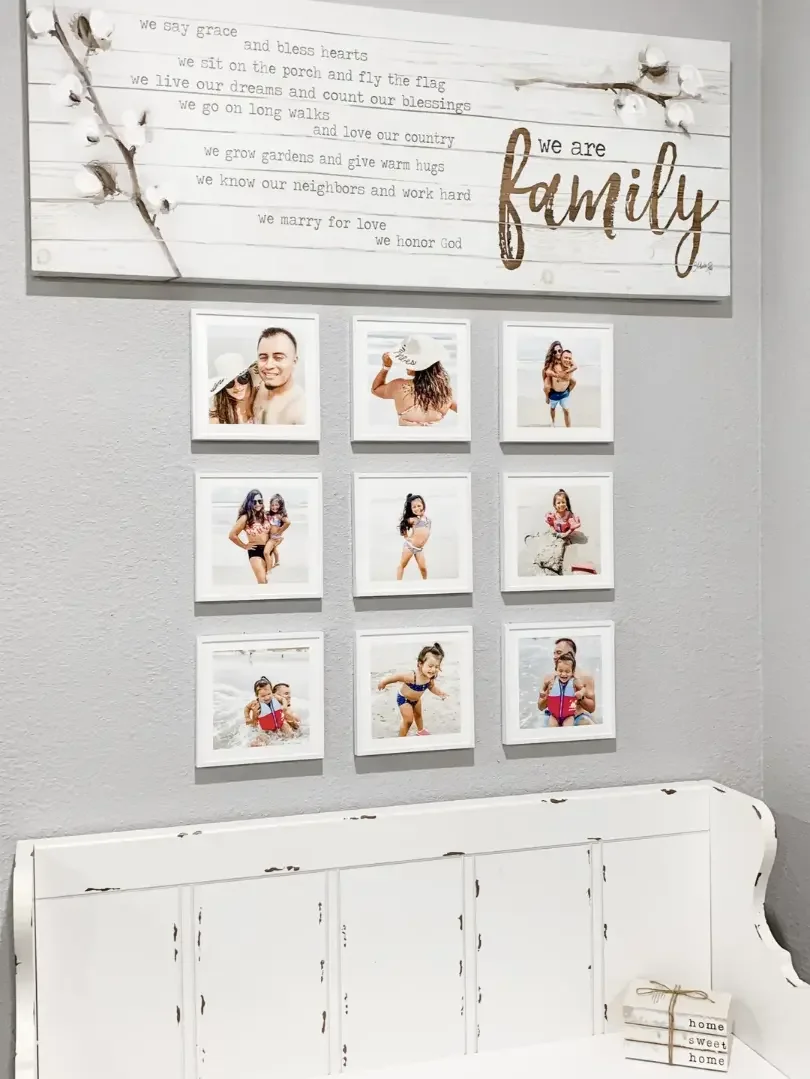
3×3 grid, 9 tiles: Balanced and architectural, ideal for medium walls and classic symmetry. Try black frames with white borders for contrast.
Linear triptych, 3 tiles: A wide sofa loves a trio of abstracts or landscapes. Choose canvas tiles for depth and a seamless line.
4×3 grid, 12 tiles: Makes a large statement without heavy frames. Mix portraits with nature to add life and texture.
Offset row, 5 to 7 tiles: A relaxed, modern rhythm above long consoles or media units. Alternate photography and line art for movement.
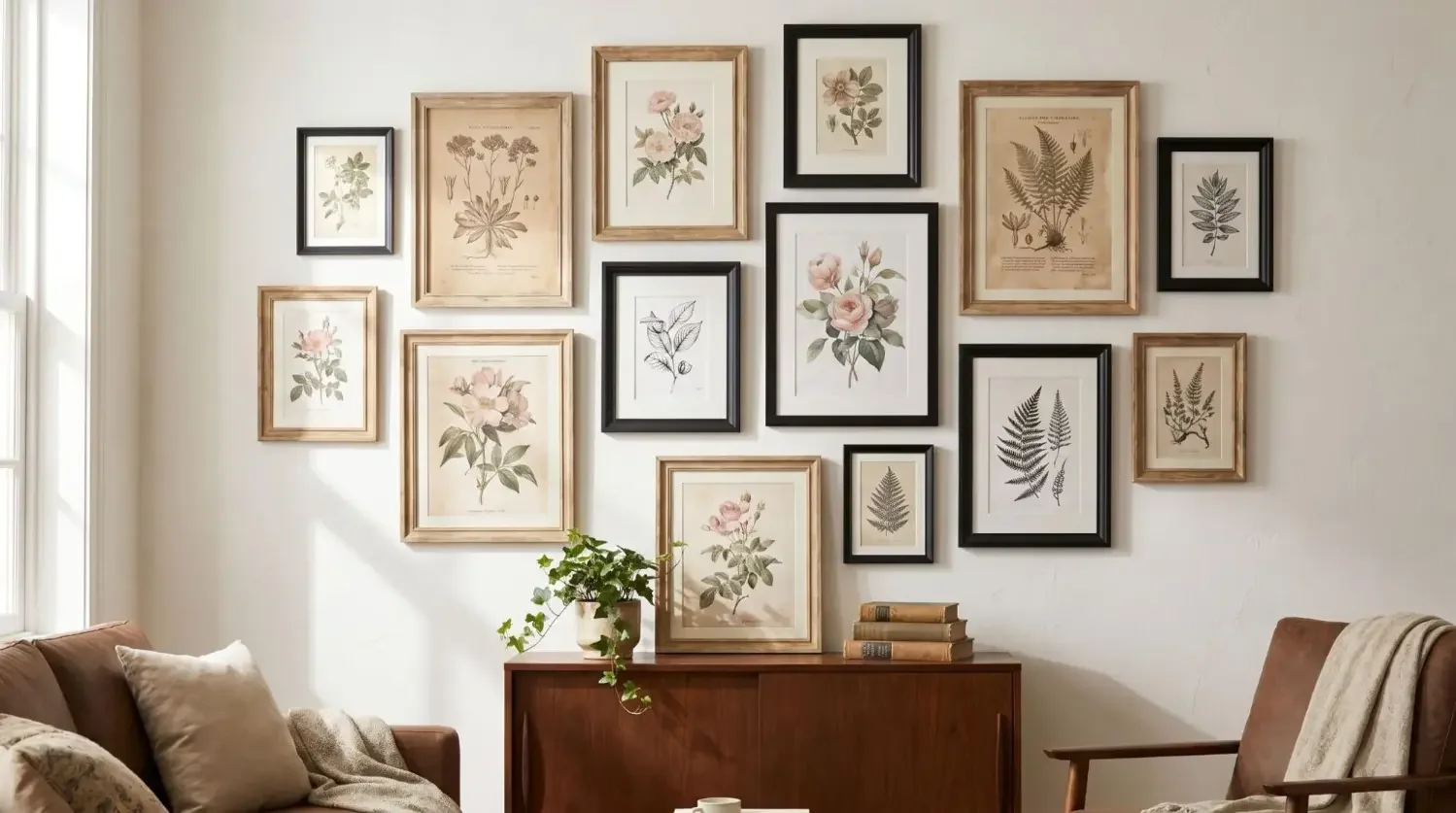
Salon mix, 8 to 12 tiles: Eclectic yet tidy when frame color matches. Combine fine art prints, still life, and travel shots in one curated wall gallery.
Need help mapping a gallery on your wall? Follow our step-by-step tutorial on how to arrange art on a wall.
Room size playbook
Use these quick pointers to right‑size your composition for different rooms and walls:
- Small rooms: Fewer, larger tiles or a tight 2×2 grid to reduce visual noise;
- Large or open plan: Bigger grids or two clusters to anchor separate living and dining zones;
- Narrow walls: Vertical stacks of 2 to 4 tiles to draw the eye upward.
Can you mix personal photos with abstracts and still look contemporary?
Yes. Choose one unifying element such as a shared palette, a nature theme, or a single frame color, then repeat it across the gallery. Alternating photo, abstract, and line art sections creates a clean rhythm that feels designed.
These combinations keep your living room art cohesive and personal:
- Travel photography with soft geometric abstracts for a refined, modern mood;
- Family portraits in black and white with minimalist botanicals for organic calm;
- AI pet portraits with bold typographic prints for a playful, contemporary accent.
Bring your vision to life with the Mixtiles app. Preview layouts on your wall, and build a cohesive gallery with our beautiful canvas prints. See how easy it is to create a stunning display without nails or damage.
Where should you place contemporary art in a living room?
Anchor the seating zone first, then balance other focal points like the TV or fireplace. Center your gallery to furniture rather than to the wall when possible for a designer finish.
Above the sofa: Use the two thirds width rule and keep 6 to 10 inches above the back. A 3×3 grid or linear row both work well.
Over the mantle: Leave at least 4 inches of air above the shelf. Consider a single large canvas or a tight 2×3 grid of framed tiles.
Flanking the TV: Build symmetrical stacks to balance the screen. Stick to black or white frames for a unified look.
Above a console: Center the gallery to the console width. A 2×3 grid of art prints or a row of 5 tiles looks polished.
Primary sightlines: Place your strongest composition on the wall you see first when entering the room for maximum impact.
How do you hang and swap contemporary wall art without damaging walls?
Mixtiles use adhesive or a magnet system designed to hold firmly, remove cleanly, and be reused many times. You can test layouts, lift, and reposition without tools, holes, or patching, which is perfect for renters and frequent refreshers.
If you are renting or avoiding holes, learn how to hang wall art without nails for a clean, renter-friendly install.
5-step no-stress install
Follow this simple sequence for a perfect gallery on the first try:
- Clean the wall: Wipe the area with a dry cloth to remove dust;
- Plan the layout: Arrange tiles on a table, decide spacing, and mark your centerline with painter’s tape;
- Measure and level: Use a tape measure and a small level to keep rows straight and gaps even;
- Mount tiles: Start from the center, press to secure, then work outward while maintaining consistent spacing;
- Step back and adjust: Reposition as needed, then save layout notes for future seasonal swaps.
Surfaces and prep
Mixtiles work best on flat, painted walls. Many customers also hang them on light texture, wood paneling, wallpaper, brick, or stucco. Press firmly for a few seconds to help the adhesive grip. Avoid flaking paint or heavy texture. For fresh paint, wait until fully cured. Clean tiles with a dry, soft cloth only.
Want quick inspiration? Try these 10 ready-to-copy living room wall recipes
Use these ideas as starting points, then personalize colors, subjects, and frame styles to fit your home decor and lifestyle.
1) The calm grid, 9 tiles
Convert family portraits to black and white, use black frames, and keep 2 inch gaps for a gallery effect that works in any living room.
2) Soft neutrals trio, 3 tiles
Hang a beige gradient abstract triptych over a loveseat or in a bedroom corner for a soothing, modern statement.
3) Coastal band, 5 tiles
Line up horizon photos and seascapes across a long sofa. Add one blue accent tile for subtle depth.
4) Botanical balance, 6 tiles
Alternate leaf line drawings with macro plant photography in two rows of three for organic calm.
5) City moments, 8 tiles
Combine architectural shots with minimalist street abstracts in a 4×2 layout for soft industrial style.
6) Typo‑pop accent, 4 tiles
Pair two bold typographic prints with two candid lifestyle photos above a console for a playful focal point.
7) Family story wall, 12 tiles
Arrange images chronologically to celebrate life milestones. Keep one background color or printed border depth for cohesion.
8) Pet pride pair, 2 tiles
Feature pets in high‑contrast portraits over a small console or between windows. Works in a kids room too.
9) Seasonal swap row, 5 tiles
Rotate spring florals, summer coastal scenes, autumn landscapes, and winter still life while keeping the same layout.
10) Stair‑step stack, 4 tiles
Create a vertical rhythm along a side wall to draw the eye upward and define the zone near a dining area.
Contemporary wall art for living room spaces is about clarity, calm, and curation. With the right size, layout, and palette, even simple pieces feel elevated. Blend personal photography with abstract or still life art and keep frames consistent for a polished result. Mixtiles makes it easy to create, hang, and refresh without tools or damage, which means you can keep your home looking current now and in the future. Explore our products, from Gallery Wall Kits to Canvas Tiles and Fine Art Prints, and turn every wall into a story that fits your style.
Create your contemporary living room gallery with Mixtiles today. Explore our collection of wall arts, and consider a personalized photo book as a meaningful gift for the people you love. Start designing, add to cart, and review your order at checkout.
Frequently Asked Questions
What materials and finishes work best for contemporary living room art?
Matte photo paper in slim frames looks refined and reduces glare. Canvas adds soft texture that feels relaxed. Metal or acrylic prints look crisp and modern, but can reflect light. Choose thin, neutral frames, consider wide white mats, and avoid ornate details for a clean result.
How do I choose a contemporary color palette that still feels warm?
Start with your room’s neutrals, then pick two accent hues found in textiles or rugs. Use a 70, 20, 10 balance for base, secondary, and accent. Add warm undertones like camel, sand, or terracotta. Mix black and white pieces to keep the palette grounded.
How can I style wall art around a TV without visual clutter?
Treat the TV as part of the composition. Keep art in a balanced grid or symmetric stacks that align to the screen edges. Limit colors for cohesion, prefer thin frames, and maintain even spacing. Leave breathing room so the TV and art do not compete.
What renter-friendly ways exist to hang contemporary wall art?
Use removable adhesive strips or hooks, picture ledges, or lean framed pieces on consoles and mantels. Create paper templates, map the layout with painter’s tape, then commit. Keep groupings tight and lightweight. Test a single piece first, and clean walls before mounting.


Be the first to know — deals, news & decor ideas.
By clicking you agree to the Terms of Use & Privacy Policy