
What Is Abstract Art? Discover Its Allure Today!
Key Takeaways
- Abstract art prioritizes line, color, shape, form, texture, and gesture over literal representation, ranging from slightly stylized to fully non-objective;
- It emerged in the early 1900s with pioneers like Hilma af Klint and Wassily Kandinsky, evolved through Abstract Expressionism and Color Field painting, and continues now in digital and photographic forms;
- Major types include geometric, lyrical, abstract expressionism, color field, minimalism, op art, and abstract photography, each creating different moods for your space;
- You can create or curate striking abstract visuals and display them easily with Mixtiles adhesive, repositionable frames, no nails and no damage.
Wondering what is abstract art and why it feels so magnetic on modern walls? Abstract art trades realism for emotion, rhythm, and pure visual elements, like color, line, shape, and texture. In this guide, you will learn what abstract art means, where it came from, the styles you will see most, and how to make or choose abstract images you will love. You will also see easy ways to bring abstract energy into your home using Mixtiles lightweight, stickable frames.
Bring abstract energy to your walls. Turn your favorite abstract photos into stunning canvas prints or create unique wall arts in minutes. Just upload, choose a style, and stick them up, no nails and no damage.
What is abstract art?
Abstract art is a type of artwork that does not attempt to represent visible reality precisely. Instead, it uses forms, color, line, and gesture to create a work of art rooted in feeling and idea. Think of abstraction as a spectrum, from paintings that simplify the world to non-objective works with no external source at all. People connect with it because the shapes, contrasts, and rhythms invite personal interpretation.
What’s the difference between abstract, non-objective, and figurative?
Abstract: derived from the real world yet simplified, stylized, or distorted so it looks different from a literal scene. Non-objective: pure abstraction, where the painting has no reference to external reality and is built from color, line, and shape alone. Figurative with abstraction: representational images that keep recognizable subjects while embracing stylization, exaggerated color, or geometric forms.
Key visual features to look for
Notice line and gesture that suggest speed or calm; harmonies and clashes of color that drive emotion; shape families, from organic curves to horizontal and vertical grids; composition that pushes your eye across the canvas; surface and texture that reveal how the artist applied paint.
Quick glossary
- Geometric abstraction: crisp shapes and clean edges;
- Lyrical abstraction: fluid movement and expressive color;
- Abstract Expressionism: energetic brushwork and scale;
- Color Field: broad planes of hue that feel immersive;
- Minimalism: pared down form and palette;
- Op art: optical patterns that vibrate;
- Non-objective: zero reference to the visible world.
How did abstract art start, and how has it evolved?
Modern art shifted rapidly in the early twentieth century as artists explored new ideas in science, music, and spirituality. Early abstraction grew from movements where artists working in Europe reduced scenes to structure and color, then in the United States it blossomed into large, expressive works that defined the art world for decades.
Pioneers you should know
Hilma af Klint created some of the first abstract paintings, developing visionary works as early as 1906. Wassily Kandinsky often receives credit for the first abstract painting too, linking colors to sounds and feelings. Kazimir Malevich pushed toward pure geometry with works like Black Square. Piet Mondrian refined a language of horizontal and vertical lines with primary colors, a hallmark of De Stijl that still feels new. Their roots connect to Paul Cézanne, Henri Matisse, and the innovations of Pablo Picasso and Georges Braque, who fractured reality into planes and set the stage for total abstraction.
Big moments and movements
By the 1940s the center of gravity moved to the United States. Abstract Expressionism exploded in New York: Jackson Pollock dripped and flung paint across vast canvases; Willem de Kooning fused figure and gesture; Mark Rothko built profound color fields that glow from within. These abstract artists reshaped twentieth century painting. In later decades, Minimalism and hard-edge painting emphasized clarity, while Op art used pattern to challenge perception. Today, digital abstraction and installation works continue the story, proving abstraction is always evolving now.
What are the main types of abstract art, and how do they look on your walls?
Abstract styles create different moods at home. Some bring structure with geometric forms, others add warmth with painterly gestures. Here is a quick comparison to help you choose the right look and Mixtiles format. If you are unsure where to start, check our guide on how to choose wall art for clarity on palette, scale, and room fit.
|
Style |
Visual traits |
Mood |
Great rooms |
|---|---|---|---|
|
Geometric |
Grids, crisp edges, horizontal and vertical balance |
Orderly, modern, focused |
Home office, dining room |
|
Lyrical |
Sweeping lines, fluid color, expressive brushwork |
Warm, dynamic, creative |
Living room, studio |
|
Abstract Expressionism |
Bold gestures, layered paint, large scale feel |
Impactful, energetic |
Entryway, large wall |
|
Color Field |
Broad planes of hue, soft transitions |
Calm, contemplative |
Bedroom, reading nook |
|
Minimalism |
Simple forms, limited palette |
Clean, airy |
Scandinavian interiors, small spaces |
|
Op art |
Optical patterns, vibration |
Playful, high energy |
Hallways, creative corners |
Quick pairing tips by style
Match or contrast your palette with surrounding textiles so the work ties in with rugs, pillows, or curtains. Play with scale, a single large color field calms a bedroom while a geometric grid adds crisp focus to an office. Repeat a color or shape across two or three pieces so the set reads like one intentional composition. Use this wall art size guide to dial in dimensions before you order.
Why do people connect with abstract art?
Abstract art invites you to feel first. Color harmonies set a mood, composition guides your eye, and texture reveals the hand of the artist. Because it is not an attempt to represent reality, meaning stays open, so your relationship with the work can deepen over time.
Common myths, debunked
- It is random: even the loosest abstract painting rests on structure, rhythm, and intention.
- Kids could do it: simplicity often masks rigorous choices of color, spacing, and edge.
- It will not fit my style: from Mondrian’s geometry to Rothko’s glow, there is a subtype for every room and taste.
Test-drive an abstract photo gallery wall without tools. Arrange and restick our versatile photo tiles until your composition clicks, no nails and no damage.
What is abstract photography, and can your phone do it?
Abstract photography uses real subjects yet treats them as color, shape, pattern, and light. With a phone, you can transform reflections, shadows, and motion into abstract art that feels painterly.
6 easy phone ideas to try today
Here are creative prompts you can shoot in minutes:
- Reflections in glass or water that warp the scene into ripples of color;
- Macro textures like wood grain, fabric weave, or peeling paint that become graphic fields;
- Intentional camera movement that turns city lights into flowing lines;
- Patterns and repetition in architecture, tiles, or stairs that read as geometric forms;
- Light and shadow play from window blinds or railings that cut the frame into bold shapes;
- Tight crops of ordinary objects, isolating curves and edges until they feel non-objective.
Quick shooting tips
Try burst or long exposure apps for smooth motion. Stabilize for crisp patterns or move deliberately for painterly blur. Lock focus and exposure so tones stay consistent. Shoot in soft light for color fields or strong side light for texture.
Simple edits that amplify abstraction
Boost contrast or saturation in select areas to clarify shapes. Try monochrome when color distracts from form. Crop again to strengthen the composition so the final image reads as a confident work of art.
How do you decorate with abstract art at home?
Start with a mood, energizing or calming, then choose a palette drawn from your existing decor. Decide on scale, a single hero canvas or a cohesive grid, and mix abstracts with photos so your wall tells a personal story. If you are building a multi-piece display, this primer on how to arrange art on a wall will help you map a balanced layout.
Room-by-room ideas

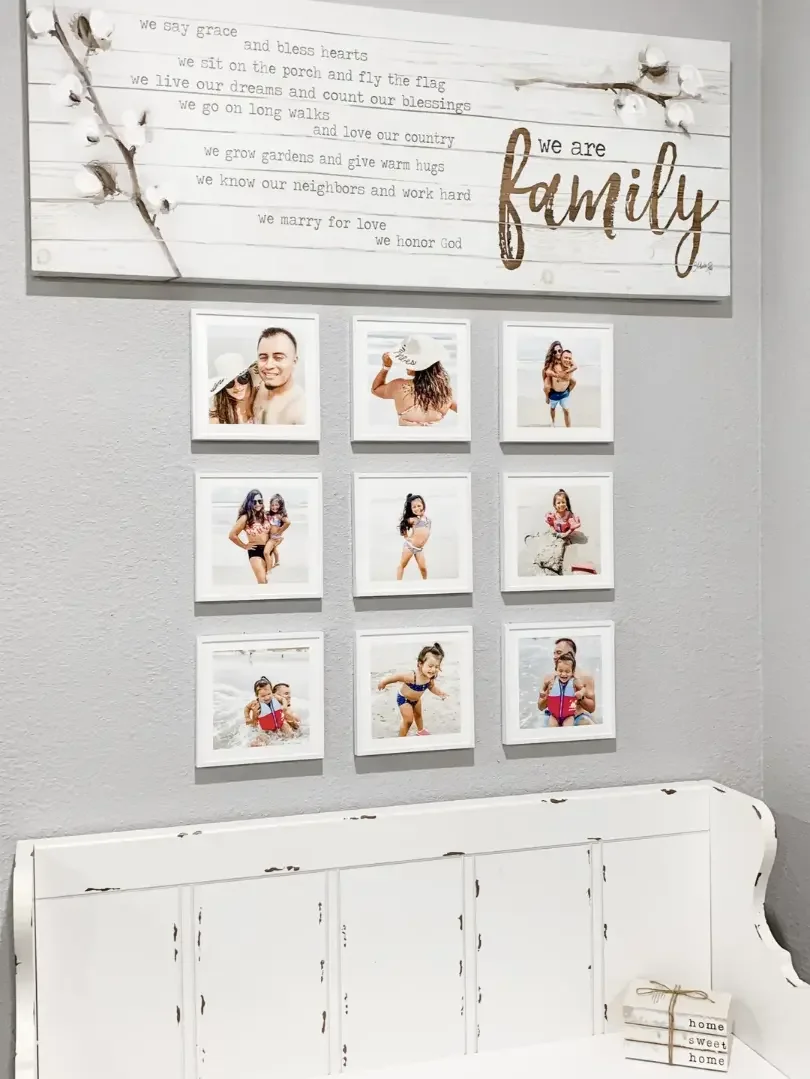
Living room: place one statement canvas above the sofa or build a 3 by 3 grid of Photo Tiles for balance;

Bedroom: lean into serene color fields or soft lyrical sets that soothe at the end of the day;

Home office: geometric or optical pieces add structure and sharpen focus;

Hallways: a vertical series or staggered abstracts creates flow as you move through the space.
How do you turn your abstract images into Mixtiles in minutes?
Mixtiles makes printing easy: lightweight tiles, adhesive or magnet mounting that will not damage walls, and fast ordering through the website or app. You can print your abstract paintings, phone photos, or digital works with borders, frame colors, and sizes that suit your room.
Step-by-step
Follow these steps to go from image to installed set:
- Pick your images: choose phone abstracts, scans of paintings, or digital designs you love;
- Choose a look: framed or frameless tiles, canvas prints, border depth, and frame color;
- Preview the layout: in the app, test a grid, line, or salon-style mix until the set feels right;
- Order in a few taps: Mixtiles prints and ships quickly to many regions, including the United States and Europe;
- Install and iterate: stick, switch, and restick your tiles until the composition sings.
Pro layout tips
Keep even spacing so a group reads as one work; align top edges when mixing sizes; test with paper templates if you are building a large wall; start from a centerline above furniture so the arrangement sits comfortably in the room. For consistent sightlines across rooms, see how high to hang art on a wall.
Abstract art is less about what you see and more about what you feel. From early pioneers like af Klint and Kandinsky to Pollock, de Kooning, and Rothko, abstraction has offered new ways to experience color, form, and movement. If you have been asking what is abstract art, the short answer is this: it is a way to create a work of art that favors sensation over imitation. Whether you shoot your own abstracts or curate favorites, Mixtiles makes display effortless, so your walls evolve as your taste grows.
Ready to create your abstract masterpiece? Upload your images to design beautiful 12x12 canvas prints and enjoy frame-perfect, nail-free hanging in days.
Frequently Asked Questions
What does abstract art really mean?
Abstract art is art that moves away from literal depiction. Instead of copying what you see, it organizes color, line, shape, texture, and gesture to express ideas or feelings. It can simplify real subjects or be entirely non-objective, inviting personal interpretation.
What are the main characteristics of abstract art?
Five common traits include emphasis on visual elements like color and line, simplification or distortion of forms, non-representational composition, dynamic use of scale and space, and openness to interpretation. Many works also show experimentation with materials, process, and gesture to create mood.
How would you describe abstract art in simple terms?
Abstract art does not try to mirror reality. It communicates through lines, shapes, colors, forms, and marks, often mixing traditional and experimental techniques. The goal is to evoke a response, guiding your eye and feelings rather than telling a literal story.
Are there rules for creating abstract art?
There are no strict rules, yet strong abstract work follows principles of design. Focus on balance, contrast, rhythm, unity, and emphasis. Use a clear palette, deliberate edges, and considered composition. Learn the basics, then experiment, refine, and trust your intent.


Be the first to know — deals, news & decor ideas.
By clicking you agree to the Terms of Use & Privacy Policy