
What is Impressionist Art: Capture Light & Emotion
Key Takeaways
- Impressionism is a 19th century French art movement defined by light, color, and visible brushstrokes, often painted outdoors to capture fleeting moments;
- It began in Paris in the 1870s with a group of artists, including Monet and Renoir among others, and was first mocked before transforming modern art;
- Impressionist techniques include broken color, minimal black, optical mixing, vivid new pigments, and compositions influenced by photography and Japanese prints;
- You can echo this style in photography by chasing soft light and motion, then display your images as easy, no nail Mixtiles for a fresh gallery at home.
Impressionism changed how we see the world, in paint and in pictures. Instead of polished detail, artists chased light, color, and movement to capture how a moment feels. In this guide, you will learn what is impressionist art, how the movement began, and the techniques that make it instantly recognizable. You will meet the main artists and discover why their work still shapes how we make images today. Then you will get practical tips to shoot and display this look at home with Mixtiles.
Love the soft, painterly look of Impressionist art? Turn your favorite photos, from golden hour portraits to breezy beach days, into beautiful canvas prints. Our frames are lightweight and adhesive, so you can create stunning wall arts with no nails and no mess. Start in the Mixtiles app or on our website in minutes.
What is Impressionist art, exactly?
Impressionist art is a style of painting developed by French artists in the late 1800s that prioritizes the effects of sunlight, color vibrations, and the mood of a scene over fine detail. It often features visible brushstrokes, bright palettes with little black, everyday subject matter, and compositions that feel candid or snapshot like. The movement broke with the academic school, making modern life worthy of art and opening the door to modern painting.
What visual hallmarks should you look for?
When you view impressionist paintings, certain traits repeat again and again. Use this quick checklist to spot the style fast.
- Short, broken brushstrokes that read as texture up close, then resolve into forms from a few steps back;
- Colorful shadows and optical mixing, with pigments placed side by side rather than heavily blended;
- Everyday life and outdoor scenes, like boating, cafés, city boulevards, and changing weather or time of day;
- A sense of immediacy, with open compositions and unusual angles influenced by photography.
What does “en plein air” change about painting?
“Plein air” means painting outdoors, directly in front of the subject. For impressionist painters, working outside demanded faster decisions, bolder marks, and a lighter palette to capture shifting light. The result is a luminous, airy look that feels alive, a true impression rather than a polished studio rendition in oil on canvas.
How did Impressionism begin, and who named it?
Impressionism began in Paris in the 1870s when a group of artists organized independent exhibitions outside the official Salon. In 1874, Claude Monet showed Impression, Sunrise. A critic, Louis Leroy, mockingly called the style an “impression,” and the name stuck. Many viewers saw the paintings as unfinished, but curiosity grew as people recognized a new way to see modern life.
From rejection to recognition
At first, the group’s work was rejected by Salon juries that favored polished history subjects. The impressionists responded with their own exhibitions, eight in total, inviting viewers to explore city scenes, leisure, and nature through fresh brushstrokes and light. Dealers like Paul Durand Ruel provided critical support, organizing shows in Paris, London, and New York. Over time, the public began to see the value in this new painting style, and membership in the exhibitions helped several artists find an audience.
Who were the key Impressionist artists?
The impressionist group of artists did not paint the same way, yet their shared pursuit of light and modern life united them. Here are the main figures you will see in any museum collection or exhibition devoted to the movement.
Claude Monet: Often the name most associated with impressionist art, Monet explored light and atmosphere through serial views, like haystacks and water lilies. He captured the effects of sunlight across seasons and hours, showing how color and shadow shift in real time.
Pierre Auguste Renoir: Renowned for warm, luminous figures and social scenes, Renoir’s brushstrokes soften form, turning gatherings into vibrant images of modern life.
Edgar Degas: Interested in movement and unusual angles, Degas studied dancers, theaters, and everyday work. Unlike many, he often painted in the studio, yet his compositions reveal the modern city’s rhythm.
Camille Pissarro: A steady voice of the group, Pissarro painted rural villages and later Parisian boulevards. He was the only artist to show in all eight impressionist exhibitions and mentored younger painters.
Berthe Morisot and Mary Cassatt: These impressionist artists brought nuanced views of domestic interiors, motherhood, and social life, expanding subject matter and representation during a time when women’s access to training and exhibitions was limited.
Alfred Sisley and Gustave Caillebotte: Sisley focused on landscapes with delicate color. Caillebotte balanced design and realism, mapping Paris’s new streets and rain swept avenues with striking perspective.
Édouard Manet: Not a formal member of the group’s exhibitions, Manet bridged Realism and Impressionism. His bold paint handling and modern subjects influenced the movement enormously.
Why include Morisot and Cassatt?
Women artists faced barriers to training, life drawing, and membership in institutions, yet Berthe Morisot and Mary Cassatt helped redefine what belonged in art. Their interiors, portraits, and scenes of modern life challenged narrow views of subject matter and gaze, and their work is now celebrated in museums like the Met, the National Gallery, and the Tate.
Which techniques make an artwork instantly “Impressionist”?
Impressionist paintings typically use broken color laid in short strokes, light grounds to boost brightness, wet into wet passages for soft edges, and complementary colors to create darks instead of mixing with black. The goal is to let the eye mix color at a distance and to record the feel of light moving over forms.
New synthetic pigments, like cerulean blue, cadmium yellow, viridian, and synthetic ultramarine, expanded the palette and made skies, water, and foliage more vivid. Portable paint tubes let painters travel and paint outdoors. Photography introduced candid framing and a taste for everyday stories, while Japanese ukiyo-e prints inspired bold cropping, flat color areas, and open compositions. Together, these innovations opened paths that later led to Post Impressionism and modern art.
How did Impressionism change what artists chose to paint?
Instead of grand myths, impressionist painters explored daily life, from leisure on the Seine to cafés, boulevards, and theaters. They recorded modern Paris with bridges, trains, and factories, acknowledging how technology shaped scenery. This shift in subject matter aligned art with contemporary events and experiences, expanding what painting could be.
Inspired to capture your own impressions? Print your favorite light drenched shots as Mixtiles. Our peel and stick photo tiles let you test layouts and swap images seasonally. You can even get creative with 8x8 canvas photo prints for a mixed media look. Create your first set in minutes.
How can you bring Impressionist vibes into your own photos?
You can adapt impressionist principles to photography by chasing soft light, favoring color harmony, suggesting motion, and composing candidly. The goal is not a filter, it is a way of seeing and editing so the moment’s mood becomes the subject.
Shoot like an Impressionist
Use this quick plan to capture the look with your phone or camera.
- Chase the light: Plan sessions at golden hour, try backlighting, and welcome atmospheric weather like mist or drizzle;
- Favor color harmony: Seek pastels at sunrise, pair complements like blue and orange, and look for reflected hues on water or glass;
- Suggest movement: Use slight motion blur for swaying leaves or waves, and pan gently to keep a subject sharp against a soft background;
- Work fast and open: Take many frames, adjust exposure for highlights, and keep your aperture choice consistent to define the scene’s depth.
Compose with a modern eye
Let the frame feel candid and open. Try off center subjects and asymmetric balance. Layer foreground silhouettes against bright backgrounds, or shoot through leaves and glass to add depth. Embrace reflections on sidewalks after rain to echo the impressionist love of light on water.
Edit for softness and glow
Lift shadows gently and avoid heavy clarity. Keep contrast moderate so color can breathe. Nudge white balance slightly warm for sunset scenes and skin tones. If you print, export at high resolution and let the paper finish amplify the mood.
What’s the best way to display Impressionist prints and photos at home?
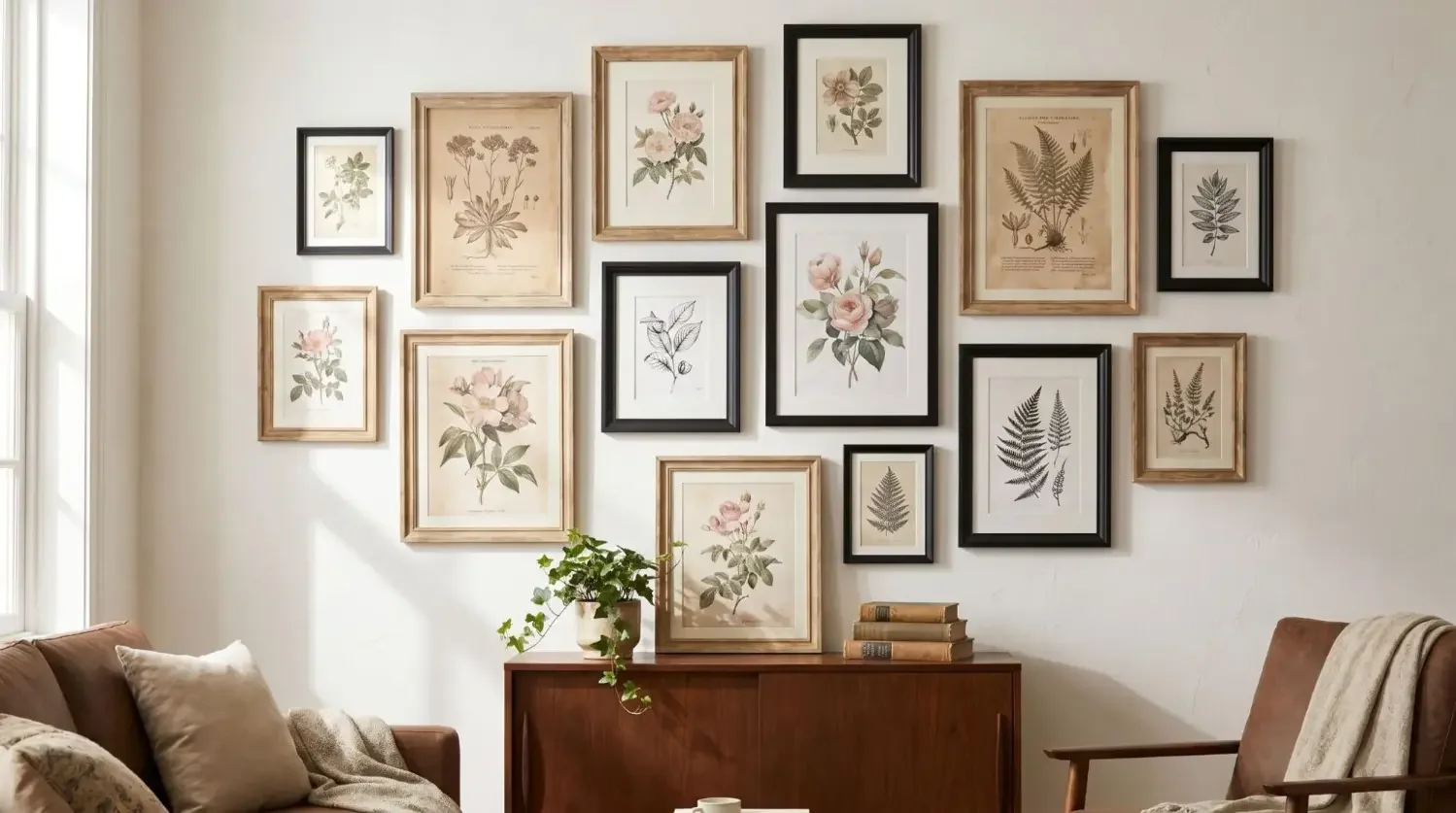
Curate a cohesive gallery that flows in color and mood, then choose formats that let you adjust easily. Mixtiles makes this simple with stick and restick tiles, canvas prints, and curated gallery wall kits that you can install in minutes.
Curate a cohesive gallery
Pick a clear concept so your wall gallery feels like a collection, not a collage of random images.

Theme ideas: Seasons of light, one neighborhood across a year, city versus nature, or a single color family from cool blues to warm golds.

Visual rhythm: Alternate close views and wide scenes, vary horizon heights, and repeat a few elements like water or trees to tie stories together.
If you are deciding between sizes for a soft, painterly grid, our wall art size guide can help you pick proportions that feel balanced in your space.
Plan layout, spacing, and color flow
Arrange prints from lightest to most saturated for a gentle gradient that mimics shifting daylight. Keep consistent margins, for example 2 inches, so the wall breathes. Test arrangements on the floor first, then move to the wall and tweak until the composition feels balanced. For spacing formulas, layout maps, and gallery templates, see how to arrange art on a wall. Unsure about eye level for different rooms? This guide to how high to hang art on a wall covers standard heights and common exceptions.
Make it effortless with Mixtiles
Mixtiles products are designed to help you build a beautiful wall quickly, then refine it whenever inspiration strikes. You can print your own photos or select from a licensed fine art collection that includes classic styles. Here is a quick comparison to help you choose the right format for your impression inspired display.
|
Format |
Mounting |
Popular Sizes |
Best For |
|---|---|---|---|
|
Photo Tiles |
Stick and restick adhesive, no nails; |
8 × 8 in, 8 × 11 in, 12 × 12 in; |
Flexible layouts, seasonal refreshes, renters. |
|
Canvas Tiles |
Peel and stick or magnet system, easy repositioning; |
12 × 16 in, 20 × 20 in, 20 × 27 in; |
Painterly look for bold color and portraits. |
|
Gallery Wall Kits |
Pre planned layouts with the same easy mounting; |
Curated sets with templates; |
Instant, balanced walls without measuring guesswork. |
You can customize borders, frame colors, and sizes, then order on the website or in the app. If you want to switch rooms or refresh images, just lift each tile and restick. It is quick, gentle on walls, and perfect for evolving collections. Renting or avoiding holes? Learn exactly how to hang wall art without nails.
What is Impressionism’s legacy today?
Impressionism opened the path to modern art. In the 1880s, artists like Paul Cézanne, Vincent van Gogh, Paul Gauguin, Georges Seurat, and Paul Signac developed new directions, often called Post Impressionism. They built on the impressionist foundation of color and light, then pushed toward structure, emotion, and science of color. Museums and galleries worldwide, from the National Gallery to the Met and the Tate, still fill exhibitions with impressionist paintings because the style continues to shape how we paint, photograph, and see everyday scenes.
To answer the question what is impressionist art, it is a way of seeing. It asks you to notice the flicker of light on a river, the cool blue of a shadow at noon, and the warmth of a café at night. From Monet and Renoir to Morisot, Pissarro, and Degas, this movement turned modern life into art with fresh brushstrokes and open compositions. Bring that spirit to your own images, then let Mixtiles turn those impressions into a bright, flexible gallery that evolves with you.
Turn your favorite impressions into wall ready art. Create a beautiful photo gallery wall with Mixtiles in minutes. Mix and match with our personalized canvas prints for a truly unique display. Everything is easy to peel, stick, and reposition without nails or damage. Start your first set on the Mixtiles app or website today.
Frequently Asked Questions
What defines Impressionist art?
Impressionist art centers on light, color, and the feel of a fleeting moment. Painters often worked outdoors, using short, visible strokes, bright palettes with little black, and everyday subjects. Compositions feel candid, influenced by photography and Japanese prints.
Was Chopin an Impressionist?
Frédéric Chopin was a Romantic era composer, not an Impressionist. He died in 1849, decades before Impressionism. His harmonic color and rubato influenced later composers like Debussy and Ravel, who are often called musical Impressionists, but Chopin himself was not part of that movement.
Is Van Gogh an Impressionist or an Expressionist?
Vincent van Gogh is best described as a Post-Impressionist. He absorbed Impressionist color and light, then pushed them toward bold emotion and structure. His art helped inspire later Expressionists, yet he was neither a core Impressionist nor an Expressionist.
How did Louis Leroy help name Impressionism?
Louis Leroy’s satirical 1874 review mocked Monet’s Impression, Sunrise, calling the works unfinished and slapdash. He repeated the word impression to deride the exhibitors. The label stuck, and the public soon adopted Impressionism as the name of the movement.



Be the first to know — deals, news & decor ideas.
By clicking you agree to the Terms of Use & Privacy Policy